Detail Berita
2026 National Coordination Meeting on Public Relations and Protocol Strengthens Communication Synergy for Impactful Higher Education
Isi Artikel
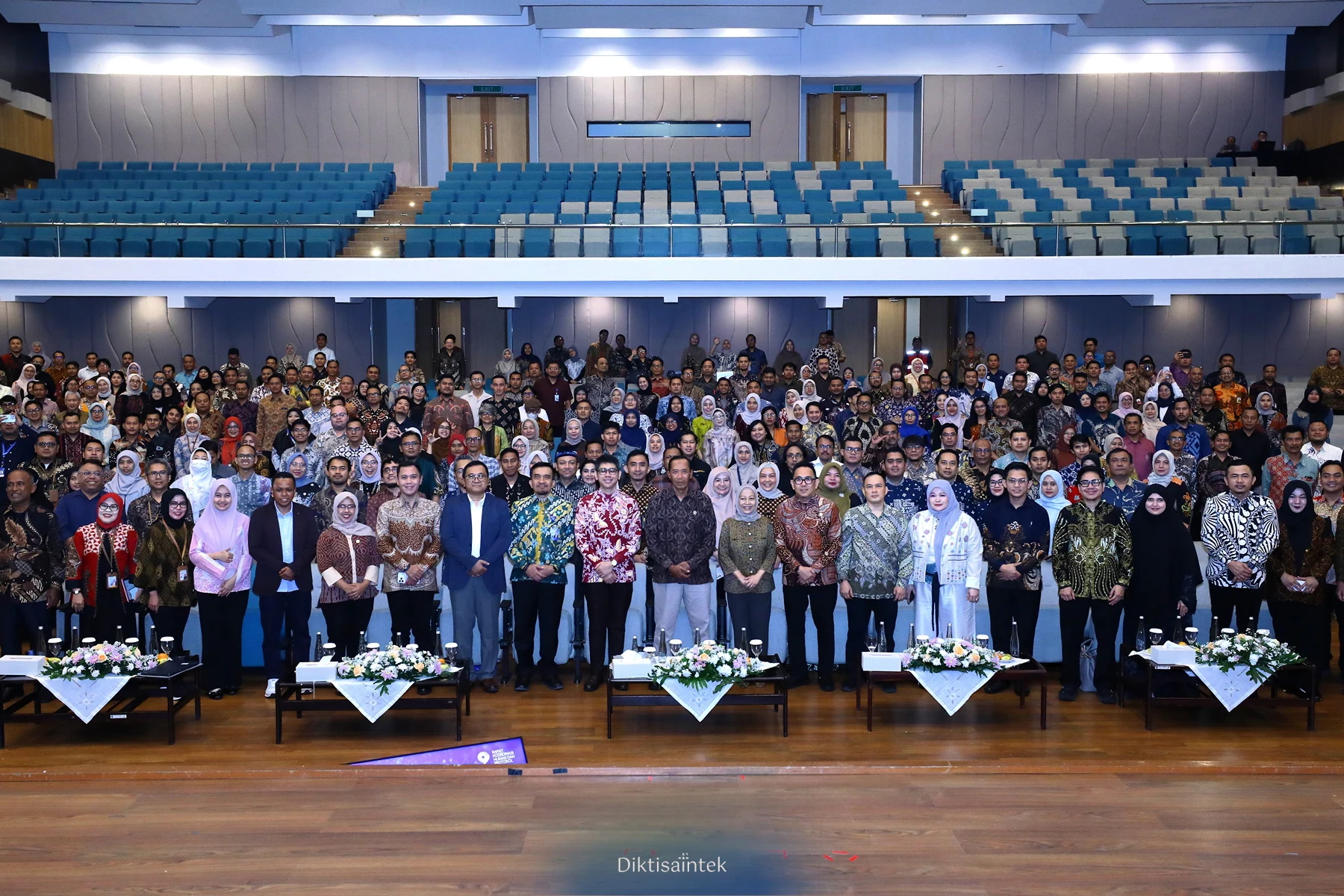
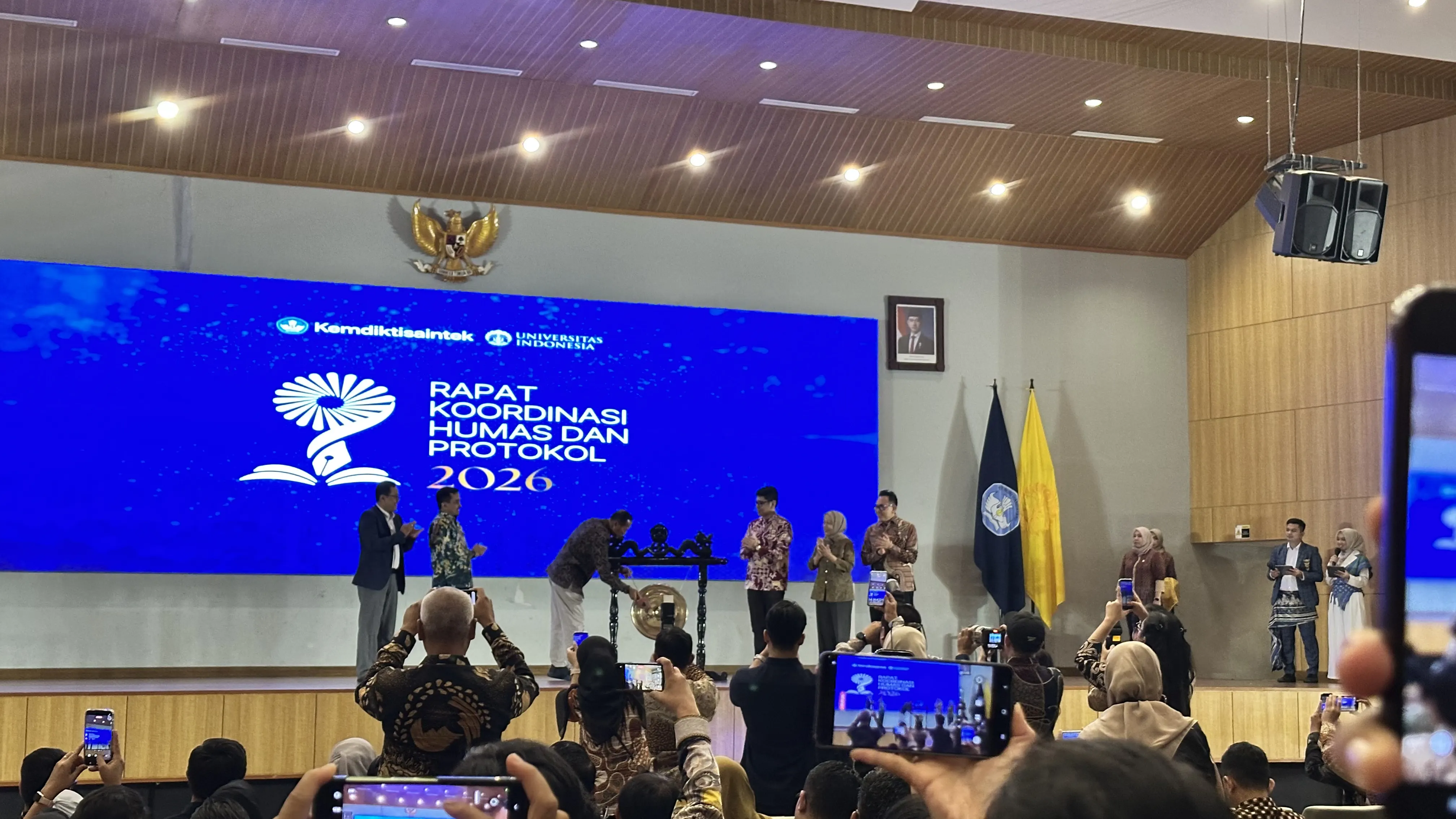
Depok, June 2–4, 2026 – The Ministry of Higher Education, Science, and Technology (Kemdiktisaintek) held the 2026 National Coordination Meeting (Rakornas) on Public Relations and Protocol at the Purnomo Multipurpose Hall, Universitas Indonesia. The event served as a strategic forum bringing together public relations and protocol practitioners from state universities and Higher Education Service Institutions (LLDIKTI) across Indonesia to strengthen collaboration, enhance professional competencies, and align public communication strategies in higher education.
The meeting was attended by Vice Minister of Higher Education, Science, and Technology, Prof. Fauzan, senior officials from Kemdiktisaintek, leaders of Universitas Indonesia, and participants representing state universities and LLDIKTI offices nationwide.
In his welcoming remarks, Acting Rector of Universitas Indonesia, Ahmad Gamal, expressed appreciation for the event and emphasized the importance of institutional communication in advancing higher education and strengthening engagement with the public.
Meanwhile, Acting Secretary General of Kemdiktisaintek, Badri Munir Sukoco, highlighted the strategic role of public relations and protocol functions in managing information and safeguarding institutional reputation. He noted that the meeting provided a valuable platform for strengthening collaboration and improving the capacity of public relations and protocol professionals.
Representing the Minister of Higher Education, Science, and Technology, Vice Minister Prof. Fauzan officially opened the event. In his address, he underscored the importance of public relations as the public face of an institution.
“Public relations is the showcase of an institution. A great institution is one that has an active, outstanding, and agile public relations team.”
The opening ceremony was enlivened by a cultural dance performance presented by the Faculty of Social and Political Sciences (FISIP) of Universitas Indonesia.
Communication as the Key to Research Dissemination and Downstreaming
During the plenary sessions, participants gained insights into strengthening public communication within higher education institutions. Yos Sunitiyoso, Director of Downstreaming and Partnerships at Kemdiktisaintek, representing the Director General of Research and Development, delivered a presentation titled “Research Development for Competitiveness: Communication as the Key to Dissemination and Research Downstreaming.” He emphasized that effective communication is essential for ensuring research outcomes are recognized, utilized, and translated into societal impact.
The importance of institutional integrity was highlighted by Nur Syarifah, Acting Inspector General of Kemdiktisaintek, through her presentation “Public Relations and Internal Oversight: Pillars of Institutional Trust and Integrity.” She stressed that public trust is a strategic asset that every higher education institution must protect and nurture.
Director General of Higher Education, Khairul Munadi, presented the 2026 Public Communication Agenda Setting under the theme “Managing Public Communication for Inclusive and Impactful Higher Education Policies.” His presentation emphasized the role of communication in bridging government policies with public needs and expectations.
Representing the Directorate General of Science and Technology, M. Samsuri, Secretary of the Directorate General of Science and Technology, discussed “Strengthening National Science and Technology through Communication Strategy Implementation.” He highlighted the importance of improving public literacy, fostering multi-stakeholder collaboration, and accelerating the impact of national research through effective communication.
Anton Rahmadi, Head of the Higher Education Assessment Management Division at Kemdiktisaintek, also presented strategies for disseminating PPAPT policies through adaptive and responsive public relations approaches.
Managing Crises with Empathy and Strategy
One of the most anticipated sessions was the panel discussion on crisis communication. Erwin Panigoro, Director of Public Relations, Media, Government, and International Affairs at Universitas Indonesia, emphasized the importance of empathy in addressing digital communication crises.
“Empathy can transform a digital crisis into an opportunity to strengthen institutional integrity.”
He further stated:
“Communication without action is speculation, while action without communication is silence. Both must work together to build integrity.”
Practical experiences in crisis management were also shared by N. Nurlaela Arief, Director of Communication and Public Relations at Institut Teknologi Bandung (ITB), through a case study titled “Building Trust Amid Crisis.”
Meanwhile, Alfian Helmi, Director of Cooperation, Communication, and Marketing at Institut Pertanian Bogor (IPB), delivered a presentation titled “Quick Response, Lasting Reputation,” highlighting the importance of timely and accurate responses to public issues.
The session was complemented by Dian Agustine Nuriman, Senior Advisor at the Government Communication Agency of Indonesia, who guided participants through “Crisis Communication Navigation: Strategies and Simulations for Universities and LLDIKTI.”
Addressing Digital Disinformation Challenges
On the following day, Donny Yoesgiantoro, Chair of the Central Information Commission, presented “Digital Issue Management and Disinformation: Strengthening University Reputation Amid Crisis.” He emphasized the need for higher education institutions to develop the capability to manage rapidly evolving digital issues and misinformation.
This topic was further explored by Karina Mancanagara, Director of PT Kurasi Media Nusantara, through her presentation “Crisis Communication Strategies for State Universities and LLDIKTI: From Early Detection to Reputation Recovery.” She introduced the concept of Crisis Intelligence, which focuses on data-driven monitoring, early detection, and strategic action in crisis situations.
Participants also gained insights into managing strategic government issues from Catur Hermawan Teguh, Junior Public Relations Officer at the Presidential Secretariat, who discussed communication approaches for handling key public policy issues.
Protocol Innovation and Recognition Programs
In addition to public communication, the meeting also highlighted innovations in protocol management. K. Akbar MK, Head of Protocol and Executive Administration at the Ministry of Women's Empowerment and Child Protection, shared best practices and innovations that can enhance the professionalism of institutional protocol services.
The event concluded with a socialization session on the 2026 Diktisaintek Public Relations Awards and Diktisaintek Protocol Awards, presented by Doddy Zulkifli, Head of Public Relations and Protocol at Kemdiktisaintek. The awards program aims to encourage excellence and recognize best practices in public relations and protocol management across higher education institutions and LLDIKTI offices.
Through the 2026 National Coordination Meeting on Public Relations and Protocol, Kemdiktisaintek reaffirmed its commitment to strengthening public communication and protocol capacities as essential foundations for building public trust, supporting impactful higher education policies, and enhancing the reputation of Indonesian higher education institutions at both national and global levels.
Isi Artikel

Tags
Dikti Coordination MeetingTags
Dikti Coordination MeetingBerita Terbaru
 Achievement
ITK Actuarial Science Student Named 1st Runner-Up Putri Duta Wisata Manuntung Balikpapan 2026
 Academic Programs
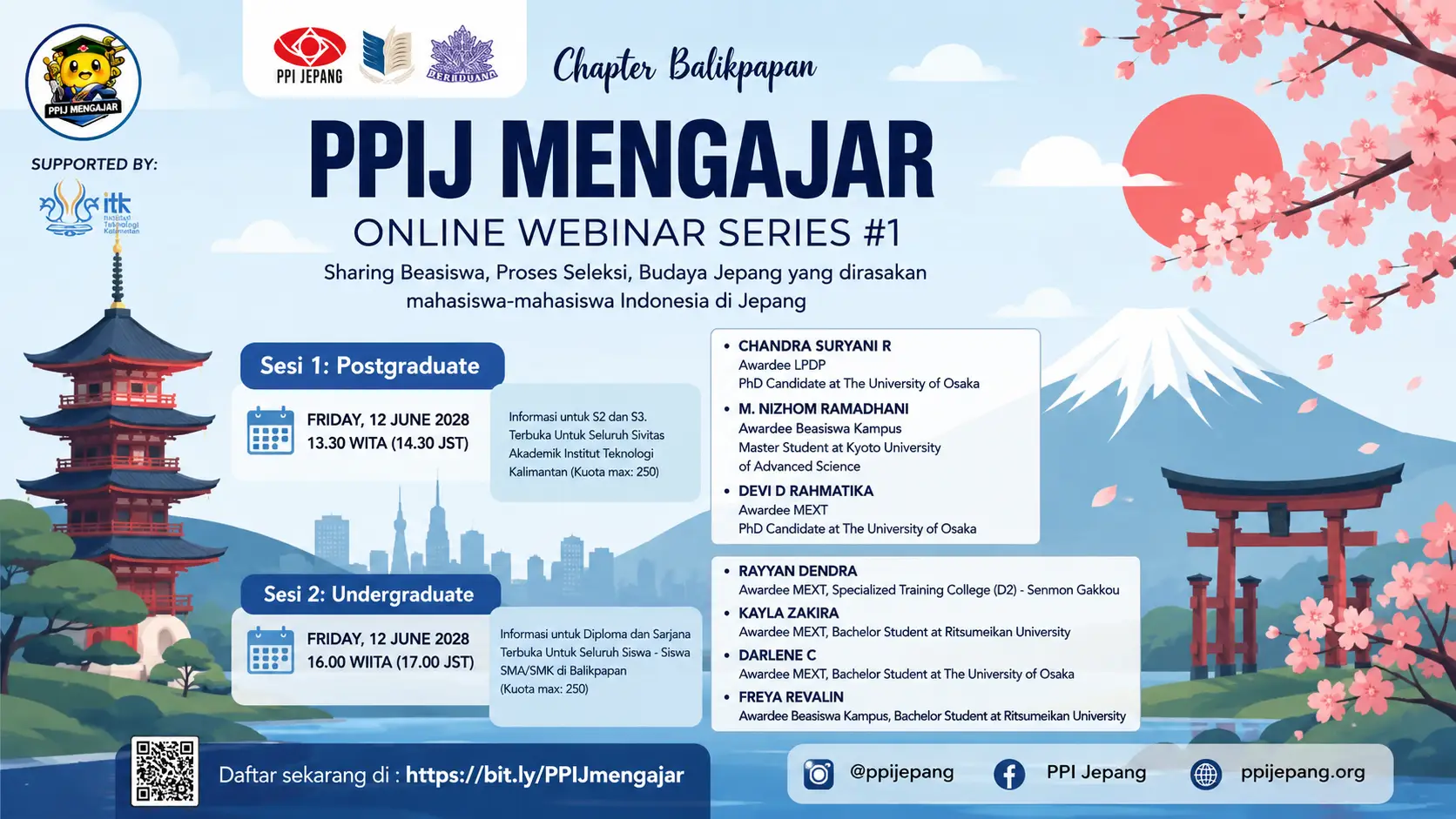
PPIJ Mengajar 2026 Chapter Balikpapan Bridges ITK Students to Global Education
 Diktisaintek Berdampak
Ryan, ITK Digital Business Student, Optimizes Digital Publications at DLH Balikpapan