Detail Berita
BIOKASA: ITK Students’ Innovation to Reduce Fruit and Vegetable Food Loss
Isi Artikel
High levels of food loss in fruits and vegetables remain a significant challenge in Indonesia’s agricultural sector. Damage during distribution, storage, and marketing often reduces product quality and results in economic losses for farmers. In response to this issue, students from Institut Teknologi Kalimantan (ITK) developed BIOKASA, an organic bio-coating made from cassava starch designed to extend the shelf life of fresh fruits and vegetables.
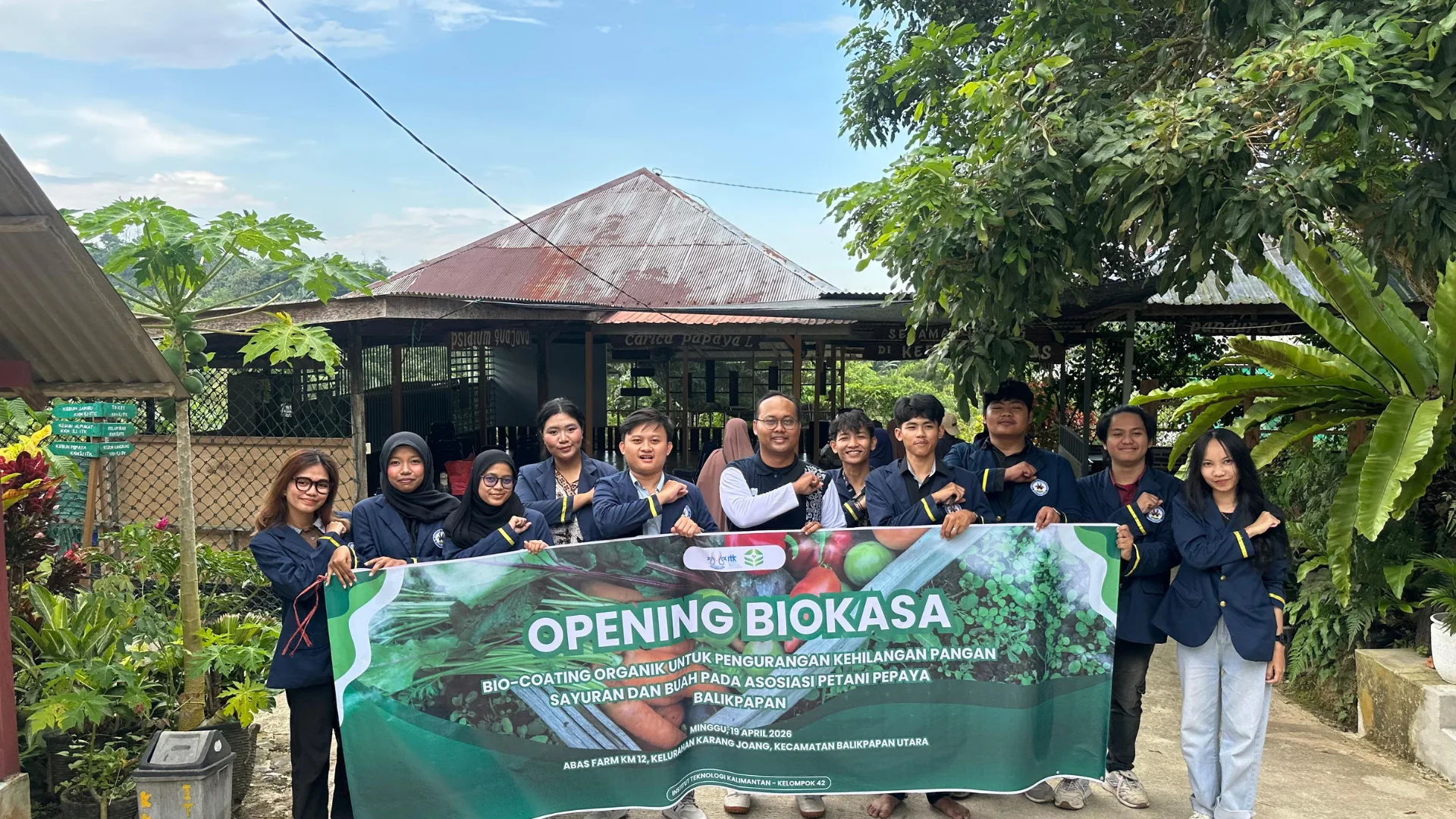
This social innovation program was implemented in collaboration with ABAS Farm and the Balikpapan Papaya Farmers Association in Karang Joang, North Balikpapan. BIOKASA was developed as a natural edible coating applied to fruits such as papaya and tomatoes to reduce respiration rates, slow physical deterioration, and maintain post-harvest freshness.
According to project leader Raif Novwan Ramadhansyah, the program focuses not only on technological innovation but also on empowering local farming communities through training and direct field assistance.
Identifying Challenges in the Field
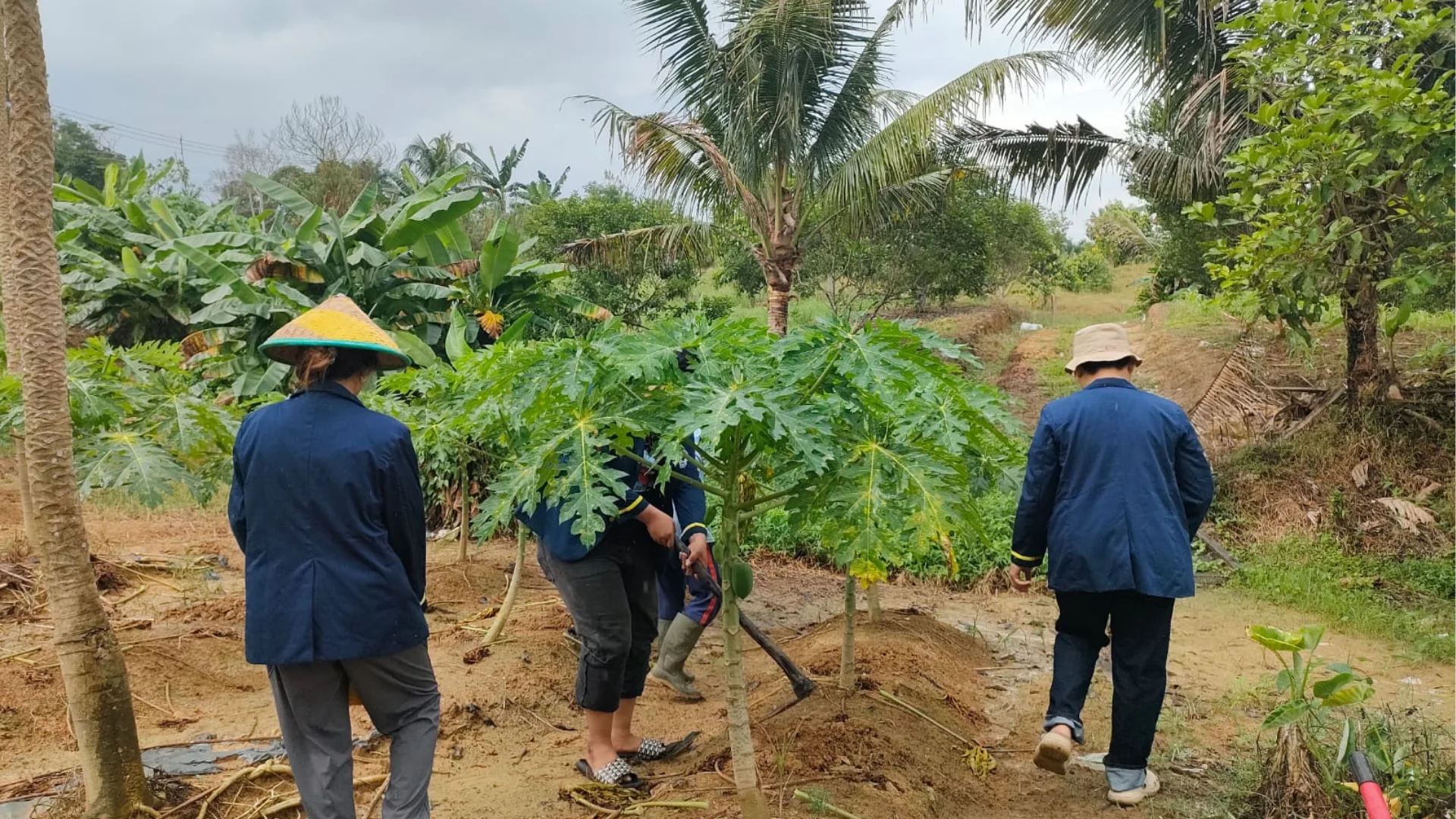
The program began with field observations and assessments at ABAS Farm. The team conducted supply chain surveys to map the distribution process, from harvesting and packaging to transportation to markets and supermarkets. They also analyzed the most common types of damage affecting papayas and tomatoes, including bruising, skin dehydration, and fungal attacks.
As part of the assessment, the team evaluated the availability of locally sourced cassava starch in Karang Joang as the primary raw material for the bio-coating. This approach was intended to ensure that the technology could utilize local resources and be easily adopted by farmers.
Developing an Organic Bio-Coating
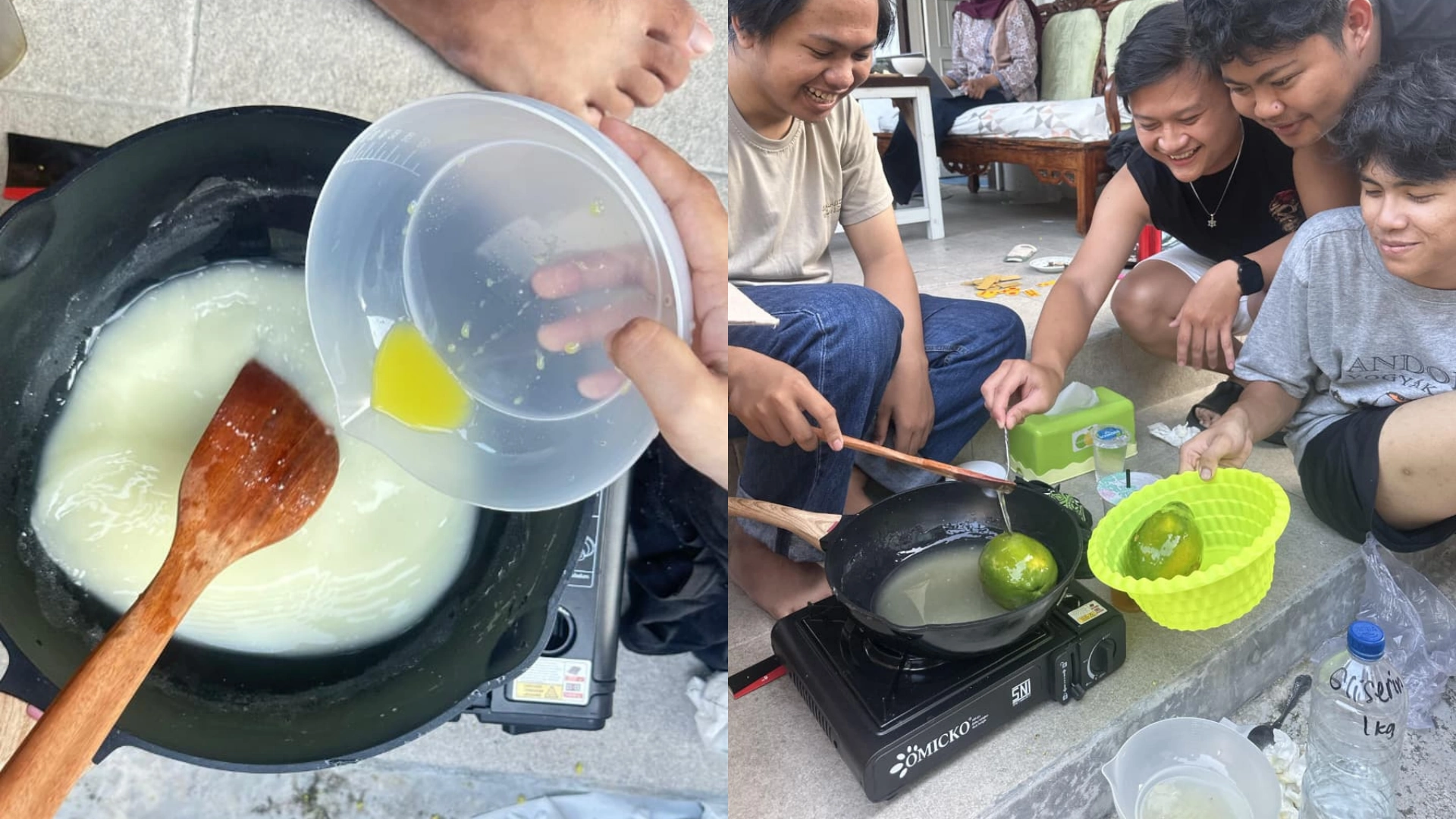
During the planning stage, the team formulated several cassava starch solutions with different concentrations to determine the most effective composition. Experiments were conducted using a trial-and-error approach by monitoring fruit respiration rates and weight loss over a period of seven to ten days.
BIOKASA was applied to papayas and tomatoes using dipping and spraying techniques. The coating functions as a natural protective layer that helps retain moisture while inhibiting the growth of microorganisms responsible for spoilage.
In addition to laboratory-scale testing, the team educated farmers about the importance of post-harvest technologies in improving the competitiveness of local agricultural products.
Hands-On Training for Farmers
The BIOKASA program extended beyond product development. The student team also organized outreach activities and training sessions for members of the Balikpapan Papaya Farmers Association. Farmers received guidance on preparing the bio-coating solution, maintaining optimal heating temperatures, and independently applying the coating to fruits.
Through this participatory approach, farmers became active contributors rather than merely beneficiaries. Ongoing assistance was provided to ensure that BIOKASA could be implemented simply and sustainably within daily farming practices.
Supported by a Multidisciplinary Team
BIOKASA involved students from various study programs, including Materials and Metallurgical Engineering, Industrial Engineering, Chemical Engineering, and Safety Engineering. In addition to project leader Raif Novwan Ramadhansyah, the team included Diva Hafsari Adinda Taqwa Siregar, Roy Francisco Kurniawan Aruan, Auriella Dwiratri Fijriah, and several other members.
The program was supervised by ITK lecturers Fikan Mubarok Rohimsyah, Dea Dita Krisnasari, and Melati Salma, who provided support in both technological development and community implementation.
Promoting Sustainable Agriculture
As a social innovation initiative, BIOKASA is expected to help reduce food loss while increasing the economic value of local farmers’ harvests. By utilizing natural and readily available materials, the technology has the potential to be applied to a broader range of horticultural commodities.
In addition to community training and assistance, the program aims to produce publication articles, activity documentation videos, and an Intellectual Property Rights (IPR) application for the BIOKASA Standard Operating Procedure (SOP).
Through this simple yet practical innovation, ITK students demonstrate that technology does not need to be complex to create meaningful impact. BIOKASA stands as an example of how collaboration between universities and communities can deliver sustainable solutions for the local agricultural sector.
Isi Artikel


Tags
Research InovationTags
Research InovationBerita Terbaru
 News
News
ITK Rector Attends MRPTNI Audience with Presidential Staff Office
 Alumni
Ahmad Diego Brings ITK Knowledge to Berau’s Development
 Scholarship
Scholarship Essays Must Reflect Applicants’ Own Ideas, Not AI