Detail Berita
From Waste to Value: Eco-Friendly Packaging Innovation for MSMEs in Desa Nelayan Berdasi
Isi Artikel
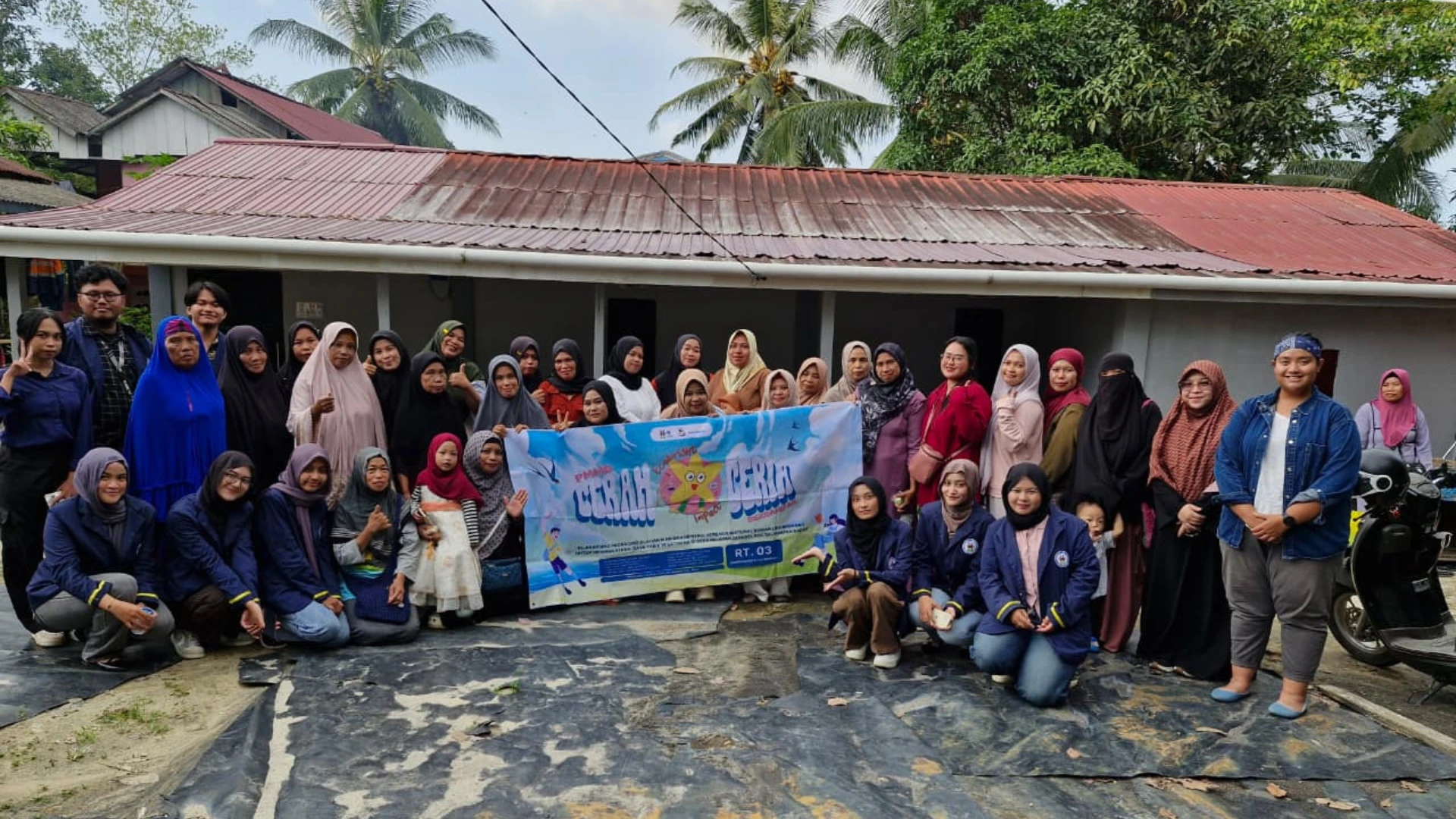
Institut Teknologi Kalimantan (ITK), through its Program Mahasiswa Mengabdi Desa (PMMD), once again demonstrates its commitment to empowering coastal communities through research-based innovation. This community service initiative was led by Chairoh Ulfah, S.Si., M.Sc. alongside Claudia Olla Mandayu, S.Ars., M.Ars., and supported by a multidisciplinary team of students consisting of Eki Permata Cahya Hati, Miftakhul Jannah, Viola Aurora, Cintya Widhi Astuti, Nilam Ayu Nandastari Romdoni, Anisah Mu’allifah Yafa, Bagas Aditya R., Reymon Batu Tandi, Tirza Paramitha, and Khodija Amalatus Sholeha, in collaboration with community partner Irawati as the Head of RT 03.
Through this collaboration, the team implemented a program titled “Re-Branding Packaging of Processed Fish and Crab Products Using Eco-Friendly Materials to Enhance Tourist Appeal in Desa Nelayan Berdasi, West Balikpapan District.” This initiative serves as a tangible effort to strengthen the local economy based on marine resource potential.
Great Potential, Real Challenges in a Coastal Tourism Village
Desa Nelayan Berdasi in West Balikpapan is known for its strong potential in processed seafood products, such as boneless milkfish and crab chili paste. However, this potential has not been fully supported by adequate packaging and branding quality.
The challenges faced by MSMEs include limited knowledge of attractive packaging design, the use of non-environmentally friendly materials, and weak product visual identity. These issues directly affect product competitiveness, particularly in attracting tourists and penetrating digital markets.
Collaborative Solution: When Science Meets Design
To address these challenges, the ITK PMMD team introduced an interdisciplinary approach by integrating expertise from Physics, Architecture, Information Systems, and Visual Communication Design.
The program was implemented through various activities, including awareness campaigns on the dangers of non-eco-friendly packaging, product re-branding training, and workshops on functional and aesthetic packaging design. This approach focused not only on visual appeal but also on safe and sustainable material selection.
Green Innovation: Transforming Crab Shells into Future Packaging
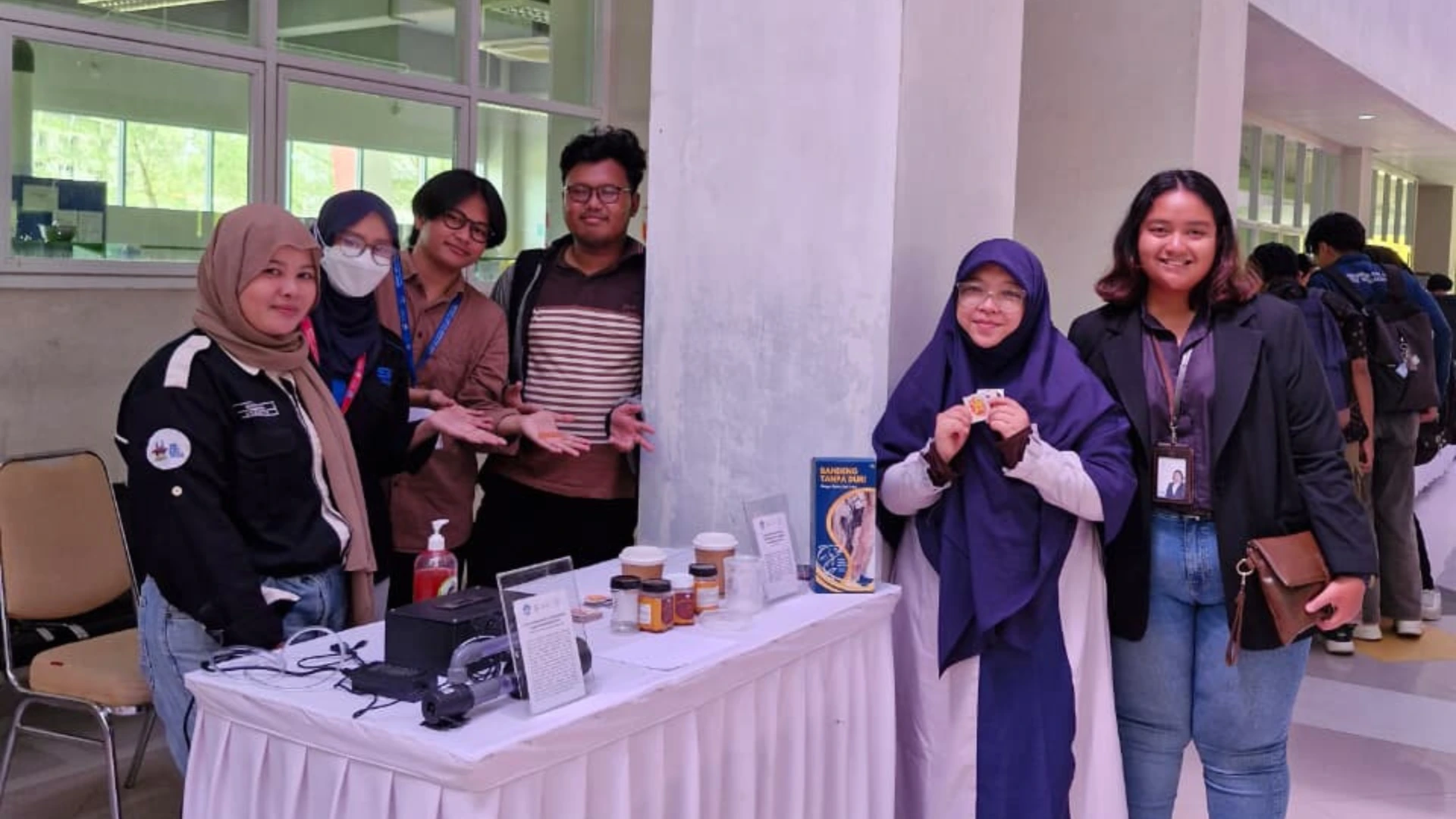
One of the key innovations in this program is the utilization of crab shell waste as a raw material for eco-friendly packaging. Crab shells contain chitin, which can be processed into chitosan—a natural compound with biodegradable and antimicrobial properties.
The processing stages include crushing, sieving, and demineralization using an acetic acid (CH₃COOH) solution, resulting in organic material that can be used as a biopolymer.
Chitosan-based materials offer several advantages, including strong and flexible film formation, food safety, and the ability to decompose naturally without harming the environment.
From Ideas to Action: Real Outcomes for MSMEs
This community service initiative produced tangible outcomes that directly benefited the local community. The team developed five alternative packaging designs and two logo designs for MSME flagship products.
Students from Architecture and Visual Communication Design contributed to creating attractive and representative visual identities, while students from Physics and Information Systems supported material development and data analysis.
Through Focus Group Discussions (FGD), the community actively participated in determining the final designs that align with the local identity of Desa Nelayan Berdasi.
Real Impact: More Confident and Competitive MSMEs
The program has had a significant impact on MSME actors, both in terms of knowledge and practice. The community gained a better understanding of the importance of branding and packaging as part of product marketing strategies.
In addition to increasing product value, the initiative also fostered awareness of environmental sustainability through waste utilization and the application of circular economy principles.
Irawati, Head of RT 03, stated that the presence of the team has inspired the community to be more proactive in developing their businesses and improving product quality to compete in broader markets.
Small Steps, Big Impact: Contribution to the SDGs
This program contributes to the achievement of the Sustainable Development Goals (SDGs), particularly:
- SDG 11: Sustainable Cities and Communities
- SDG 12: Responsible Consumption and Production
Through eco-friendly packaging innovation and strengthened MSME branding, this initiative represents a small step with a significant impact on sustainable coastal economic and environmental development.
Towards a Sustainable Tourism Village
Looking ahead, the community hopes that this program will continue with more intensive assistance, particularly in strengthening branding and digital marketing strategies.
Through sustained collaboration between academia and the community, Desa Nelayan Berdasi is expected to grow into a creative economy-based tourism village that excels economically while maintaining environmental sustainability.
Isi Artikel
Berita Terpopuler
Academic Programs
Diktisaintek Berdampak
Tags
Community InnovationTags
Community InnovationBerita Terpopuler
Academic Programs
Diktisaintek Berdampak
Berita Terbaru
 Diktisaintek Berdampak
Inspirational Story of Hendri Baransano, the First ADik Scholarship Graduate at Institut Teknologi Kalimantan
 Diktisaintek Berdampak
Farida Amanah Becomes Best Graduate of Institut Teknologi Kalimantan FRTI with a 3.71 GPA
 Diktisaintek Berdampak
Nurul Adinda Thalia Salsabila Achieves the Highest GPA of 3.76 at Institut Teknologi Kalimantan FSTI Through an Impactful Internship Program