Detail Berita
Off-Grid Solar Power Innovation for Tropical Agriculture: ITK Research Team Develops Knock-Down Modular Structure

Isi Artikel
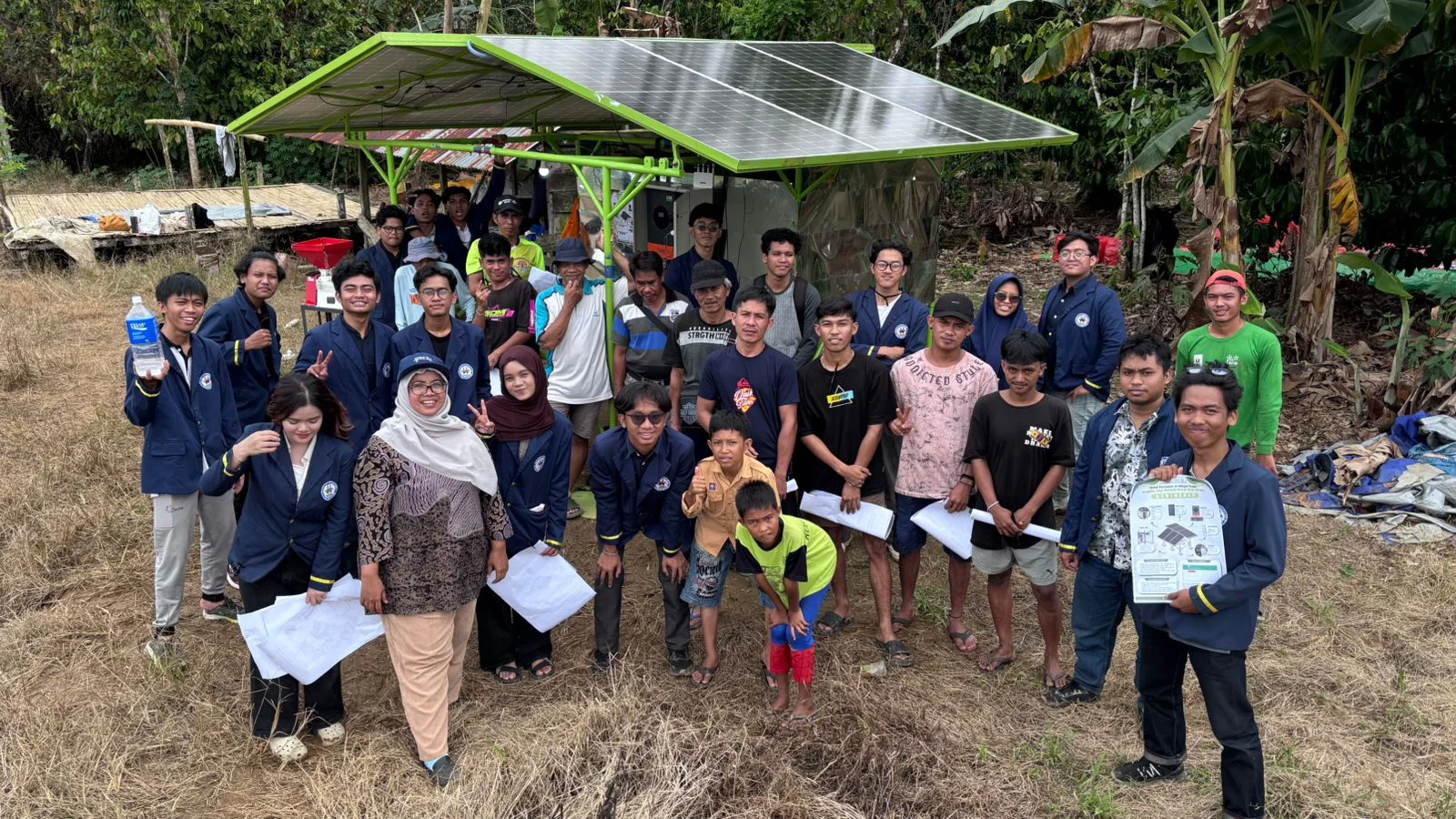
Balikpapan — A research team from the Institut Teknologi Kalimantan (ITK) has developed an innovative prefabricated modular structure design for an Off-Grid Solar Power Plant (PLTS) specifically designed to support the use of renewable energy in the agricultural sector in tropical regions. This innovation offers a solar panel frame system that is easy to assemble, dismantle, and relocate, making it more adaptive to the diverse conditions of agricultural land.
The research is led by Happy Aprillia, a lecturer from the Electrical Engineering Study Program at ITK, with team members Amalia Rizqi Utami, Risty Jayanti Yuniar, and Mifta Nur Farid. The development of this innovation also involves active collaboration with ITK students who contributed to the design process, simulation, and system testing.
The participating students come from various disciplines, including Muhammad Arif Choirul Rizal, Ahmad Syauqy Busyra, Achmad Daffa Raihan Faizah, Sri Yunita Andini, Kevin Nugraha Shaj, Jerzan Hartadin, Ali Imran, Marsa Naufal, Muhammad Rozul Faza, Rendy Muslim Arifin, Rayna Maryam Aulia, Muhammad Iskandar Yusuf, Jhosua George Kamagi, Firdaus Abrur Haqqi, and Putri Nabila.
Independent Energy Solution for Agriculture
This structural design was developed as a supporting system for solar panels in an off-grid solar power plant, which is capable of operating independently without being connected to the public electricity grid. This system is highly relevant for agricultural areas that have limited access to electricity.
The frame structure is designed using galvanized steel material, which provides high resistance to corrosion, humidity, and tropical environmental conditions. In addition, the assembly system applies a knock-down method using bolts and nuts, allowing installation using simple tools without permanent welding.
This design was developed to address the need for practical and easily implementable energy technology in the agricultural sector.
Flexible and Efficient Modular Design
The developed solar power structure adopts a prefabricated modular concept, where each component is produced in standard sizes to facilitate manufacturing, transportation, and field installation.
Some of the key advantages of this structural design include:
Prefabricated Modular System
Components are produced as ready-to-assemble modules, accelerating installation and ensuring consistent structural quality.
Knock-Down System
The structure can be dismantled and reassembled without damaging the components, making it more flexible to relocate or reuse at different locations.
Adjustable Solar Panel Tilt Angle
Solar panels can be set at three tilt angles—15°, 20°, and 25°—to optimize solar radiation absorption in tropical regions.
Dual-Blade Roof Design
The two-blade roof configuration protects electrical components and batteries from rain exposure and excessive heat while also improving air circulation.
Battery Storage Compartment
The structure is equipped with a ventilated battery storage warehouse that helps maintain stable temperature and humidity for electrical equipment.
Foundation with Wide Bearing Area
The foundation system uses a circle base plate with six support points, allowing the load to be distributed evenly and maintaining stability on relatively soft agricultural soil.
Tested Through Structural Simulation
To ensure the strength of the structure, the research team conducted load simulations using structural engineering software with a load of 420 kilograms.
The simulation results show that the structure is capable of withstanding the load effectively, with the maximum stress remaining below the material’s yield limit and with relatively small deformation levels. The structural safety factor is also above the minimum requirement for static structures, indicating that the design is safe for agricultural solar power systems.
Supporting Sustainable Renewable Energy
This modular solar power structure measures approximately 3.3 meters × 2.3 meters and is designed to support various energy needs in the agricultural sector, such as operating electrical equipment, irrigation systems, and post-harvest processing.
Beyond being a technological innovation, this design is also being prepared as a supporting document for Intellectual Property Rights (IPR) registration under the industrial design scheme. In the future, this technology is expected to be produced more widely, providing an efficient, economical, and easily applicable renewable energy solution for the agricultural sector in Indonesia.
Through the development of this innovation, ITK continues to demonstrate its commitment to delivering technological solutions that have a tangible impact on society, particularly in supporting the transition toward clean energy and strengthening sustainable agriculture.
Isi Artikel


Tags
Research Research Community Social InnovationTags
Research Research Community Social InnovationBerita Terbaru
 News
News
ITK Rector Drives Human Capital Transformation Through Innovation
 Achievement
ITK Student Wins 3rd Place in Pertamina Scientific Writing Competition
 News
News
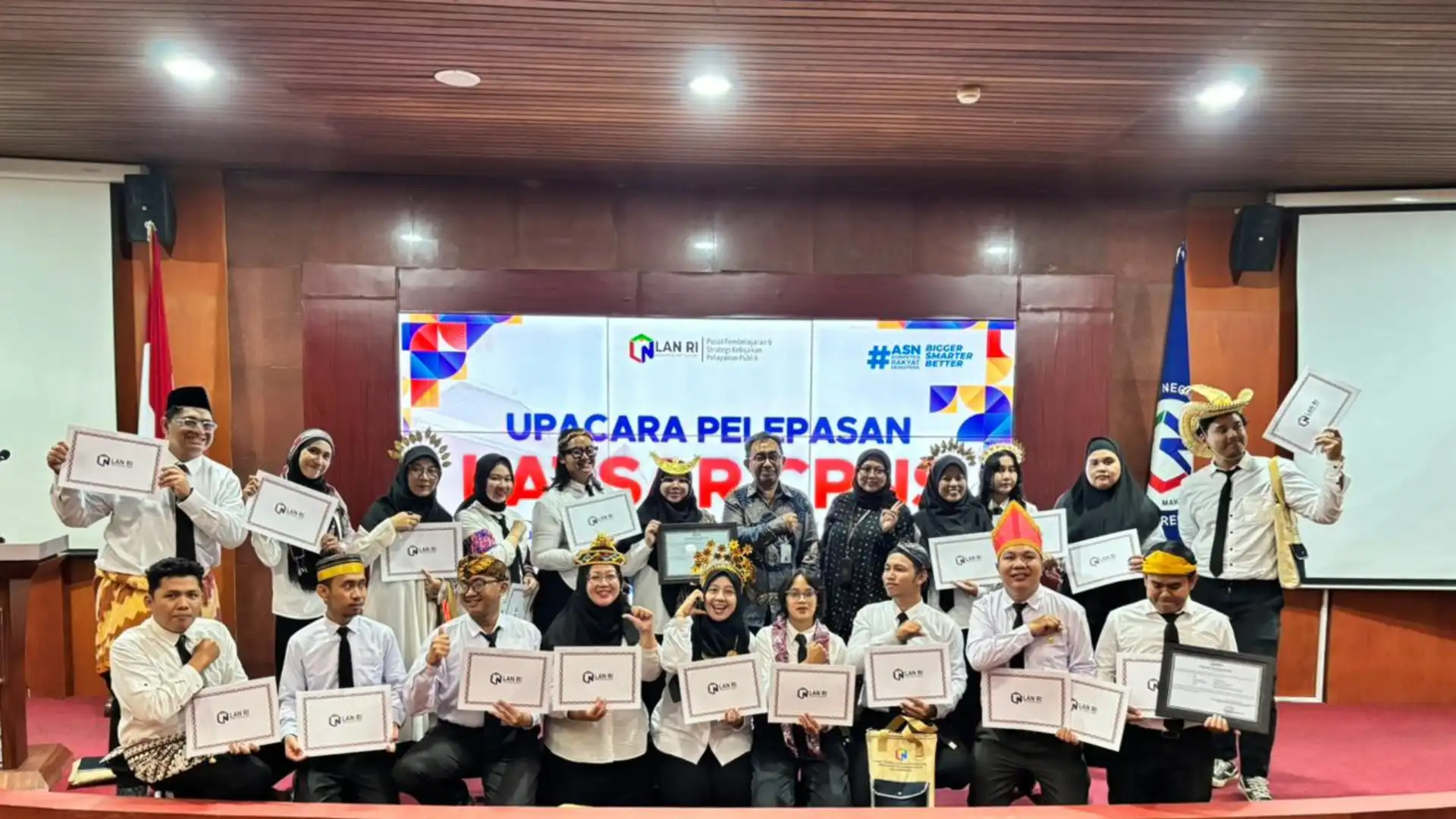
Implementation of Latsar CPNS Batch II, Class IV: ITK Achieves Outstanding Results
Implementation of Latsar CPNS Batch II, Class IV