Detail Berita
Nickel Slag Turns into Super-Strong Concrete: An Eco-Friendly Material Innovation by Researchers of Institut Teknologi Kalimantan
Isi Artikel
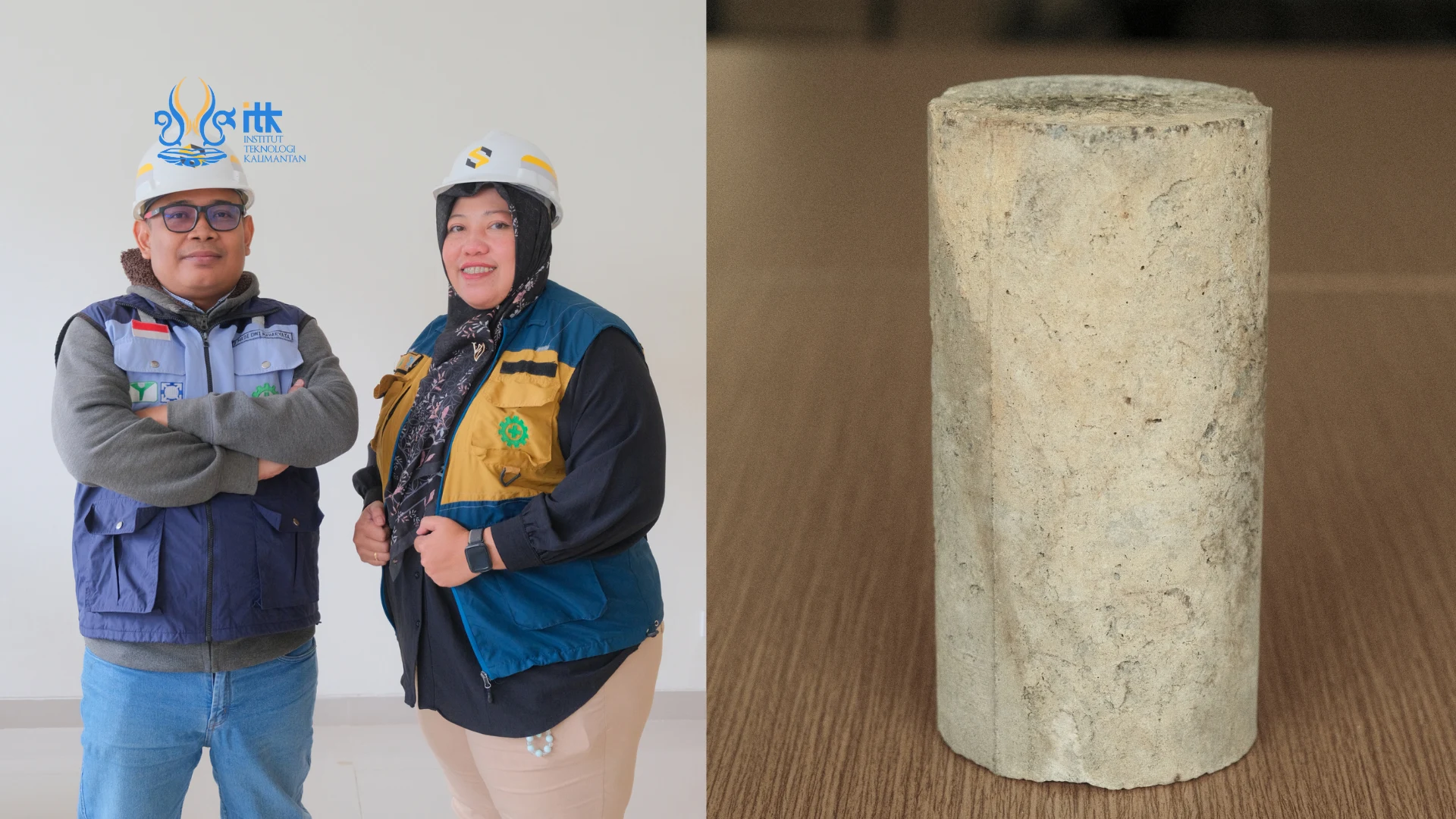
In an effort to support sustainable infrastructure development, a research team from Institut Teknologi Kalimantan (ITK), in collaboration with researchers from Universitas Hasanuddin, developed a high-strength concrete prototype utilizing nickel slag as a partial substitute for coarse aggregate. This research is led by Dr. Ir. Hijriah, S.T., M.T., together with Dr.Eng. Ir. Arief Hidayat, S.T., M.T., and Dr.Eng. Fakhruddin, S.T., M.Eng.
This innovation offers an alternative solution to the limited availability of natural aggregates while promoting the productive and environmentally responsible utilization of industrial waste.
Why Can Nickel Slag Be a Solution?
Nickel slag is a by-product of the nickel processing industry that has not been optimally utilized. Through material engineering approaches, nickel slag is used as a partial replacement for coarse aggregate in high-strength concrete with a target compressive strength of f’c 42 MPa.
The prototype was developed to:
- Determine the optimal concrete mix composition
- Analyze the effect of nickel slag on concrete strength and density
- Evaluate its environmental impact
The study involved a series of laboratory tests, including material characterization, mix variations of nickel slag (0%, 25%, 50%, and 75%), 28-day compressive strength tests, and toxicity testing (TCLP).
What Are the Characteristics of Nickel Slag?
The nickel slag used in this study originates from Morowali, Central Sulawesi. Test results indicate that the material has:
- Higher specific gravity compared to natural aggregates
- Lower abrasion value (more wear-resistant)
- Rough texture that enhances bonding with cement paste
Chemically, nickel slag is dominated by iron (Fe) and silica (SiO₂), which contribute positively to the hydration process and the improvement of concrete strength.
What Is the Concrete Mix Composition?
For 1 m³ of high-strength concrete, the composition includes:
- Portland Composite Cement (PCC): 553.78 kg
- Water: 195.77 kg
- Fine aggregate: 556.85 kg
- Coarse aggregate: 1028.60 kg
- Type F admixture: 2.77 liters
Slump test results show that all variations fall within the standard range of 80–120 mm, indicating good workability without compromising strength.
What About the Results?
The 28-day compressive strength test results are as follows:
- Normal concrete (0%): 42.03 MPa
- 25% nickel slag: 44.23 MPa (increase of 5.23%)
- 50% nickel slag: 46.31 MPa (increase of 10.17%)
- 75% nickel slag: 40.78 MPa (decrease of 2.97%)
The optimal variation is found at 50% substitution. At this proportion, the concrete becomes denser and stronger because the nickel slag effectively fills voids between aggregates.
However, at 75% substitution, aggregate distribution becomes less optimal, leading to a reduction in compressive strength.
Impact on Future Development
This innovation opens significant opportunities to:
- Reduce the exploitation of natural aggregates
- Optimize industrial waste utilization
- Support sustainable infrastructure development
- Contribute to the development of Ibu Kota Nusantara (IKN)
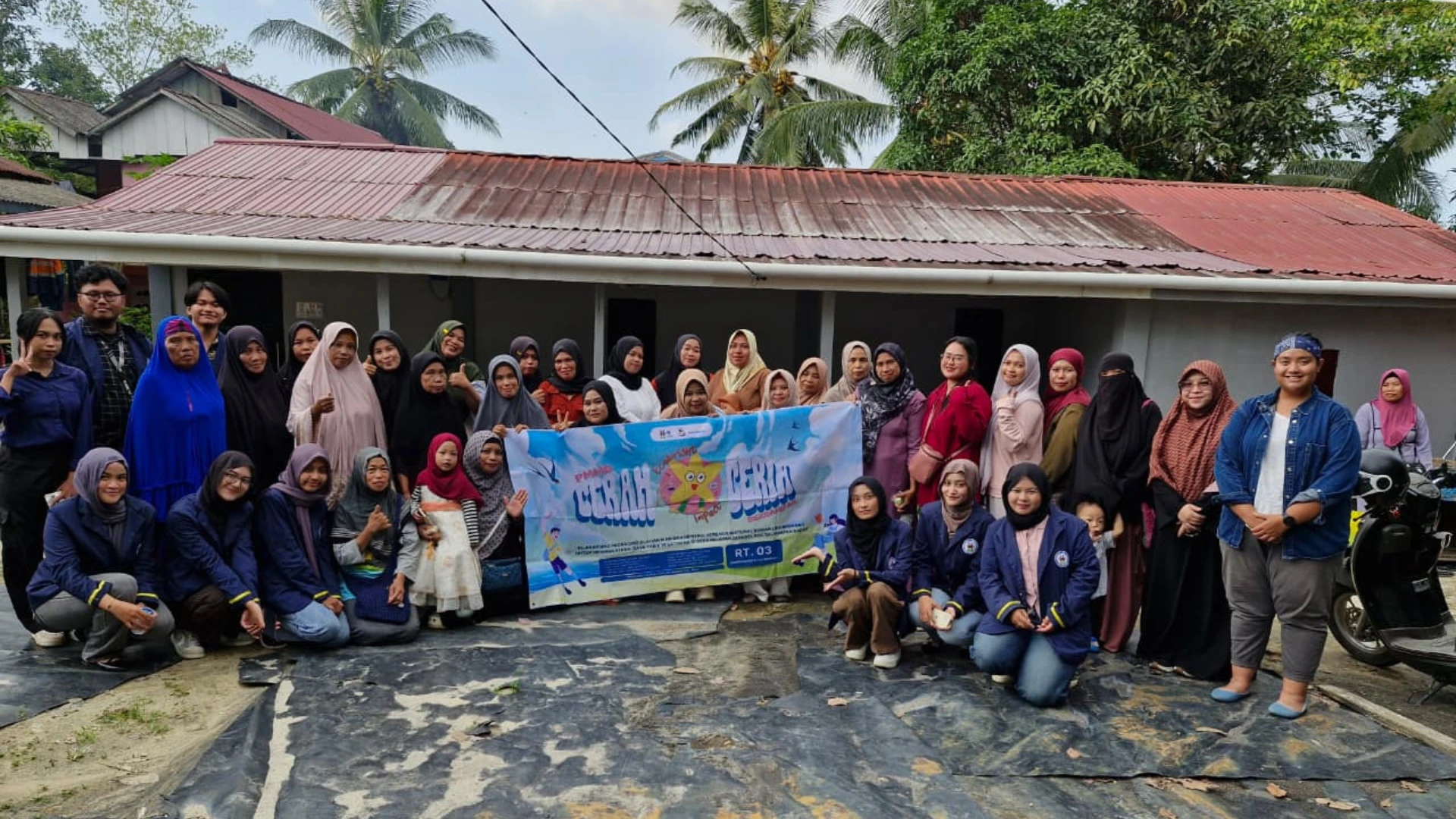
This nickel slag-based concrete prototype demonstrates the strong commitment of Institut Teknologi Kalimantan to producing applicable, innovative research with a direct impact on national development.
Isi Artikel
Berita Terpopuler
Academic Programs

Research and Community Service
Research and Community Service
Tags
Research Inovation Research Institut Teknologi KalimantanTags
Research Inovation Research Institut Teknologi KalimantanBerita Terpopuler
Academic Programs
Research and Community Service
Research and Community Service
Berita Terbaru
 Academic Programs
ITK Officially Becomes the Location for the 2026 UTBK-SNBT in East Kalimantan
Institut Teknologi Kalimantan Officially Becomes the Location for the 2026 UTBK-SNBT
 Diktisaintek Berdampak
ITK Students Wins 1st Place at AMAZINC, A Solution for Healthier and Adaptive Offices
 Achievement
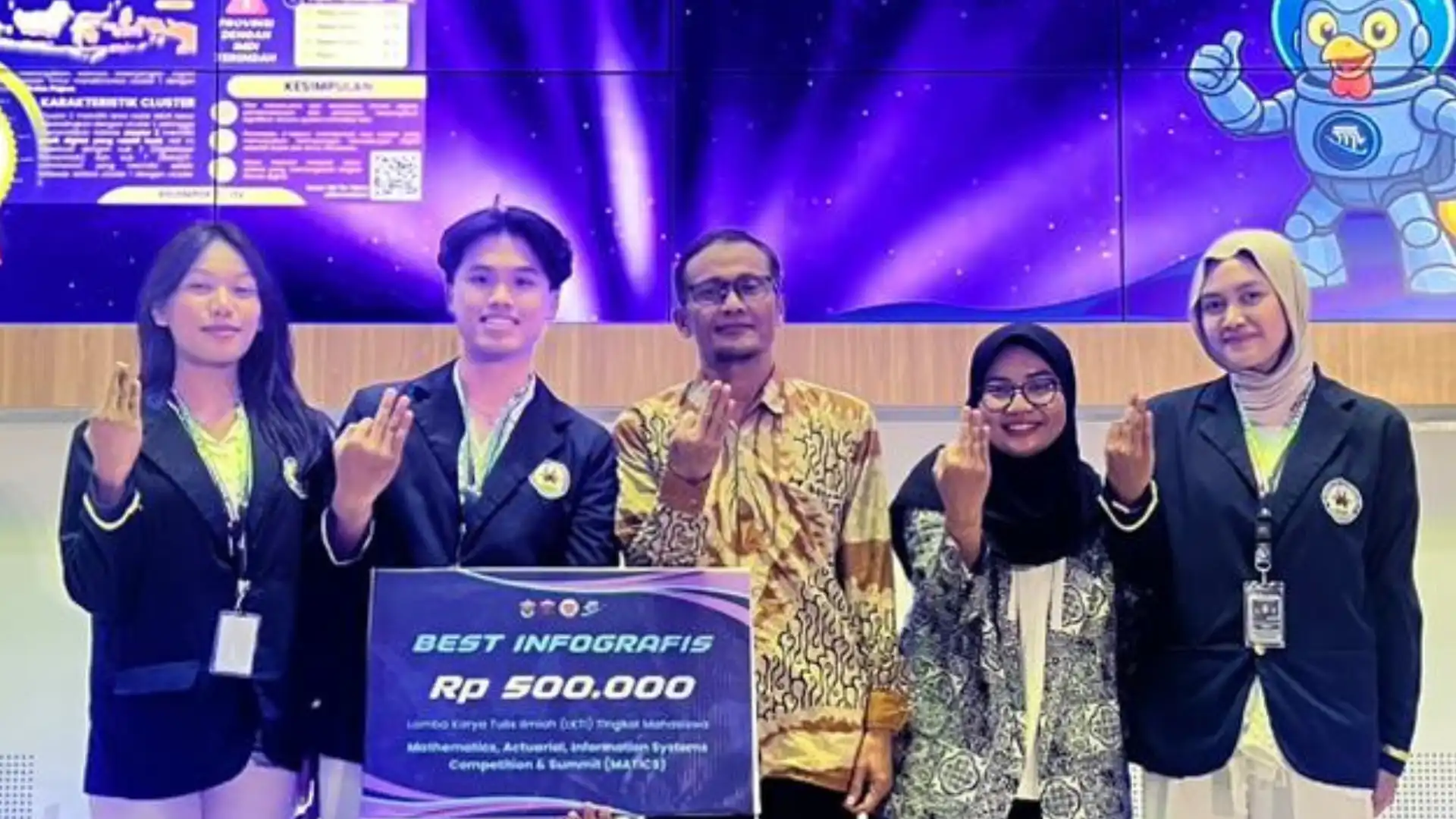
ITK Statistics Students Win Best Infographic Award at MATICS Universitas Hasanuddin
Best Infographic Award at MATICS Universitas Hasanuddin