Detail Berita
Kalimantan Institute of Technology Transforms Local Potential into Global Innovation: Glucomannan from East Kalimantan's Porang Tuber
.webp)
.webp)
Isi Artikel
Imagine a multi-functional natural ingredient that can control blood sugar levels, aid in diet programs, and be a staple in the food industry. That ingredient truly exists, and its name is glucomannan. This natural polysaccharide is found in abundance in the porang tuber (Amorphophallus muelleri).
Glucomannan is a soluble fiber that has numerous benefits for both health and the food industry. However, there is a significant challenge behind it: how to isolate this glucomannan to produce the purest and highest-quality product?
Uncovering the Best Method: Comparing Two Isolation Techniques
To address this challenge, a study led by Anggela, S.TP., M.Sc., M.Sc., a Food Technology lecturer from the Kalimantan Institute of Technology , conducted a comparative test of two different isolation methods. The goal was clear: to find the best way to extract the "gold" from fresh porang tubers.
The two methods tested were:
- GPA7 Method: Repeated grinding using water as a solvent, followed by seven filtration cycles.
- GPE Method: Repeated grinding using ethanol as a solvent, followed by filtration five times (GPE5) or seven times (GPE7).
The results of these two methods were then compared to glucomannan extracted using the dry method from a previous study.
The Resounding Victory of the GPA7 Method
The results of this study are truly interesting. The GPA7 method proved to yield the highest glucomannan content, reaching 82.79%. This far surpasses the GPE5 method, which only yielded 44.41% , and the GPE7 method, which yielded 69.12%. Although the solubility of glucomannan from the GPA7 method is lower than that of the GPE method, its superiority lies in the higher glucomannan content and low fat content (7.2%).
Glucomannan: Adding Value to Porang for Functional Foods
This research proves that the isolation method using a water solvent (GPA7) is the most effective way to maximize the added value of fresh porang tubers. This also opens up great opportunities for the development of new functional food products. With this finding, we can see how the local potential of East Kalimantan can be transformed into a global innovation that benefits many people.
Isi Artikel
Berita Terpopuler
Academic Programs
Diktisaintek Berdampak
Tags
Inovation Research Food TechnologyTags
Inovation Research Food TechnologyBerita Terpopuler
Academic Programs
Diktisaintek Berdampak
Berita Terbaru
 Diktisaintek Berdampak
Inspirational Story of Hendri Baransano, the First ADik Scholarship Graduate at Institut Teknologi Kalimantan
 Diktisaintek Berdampak
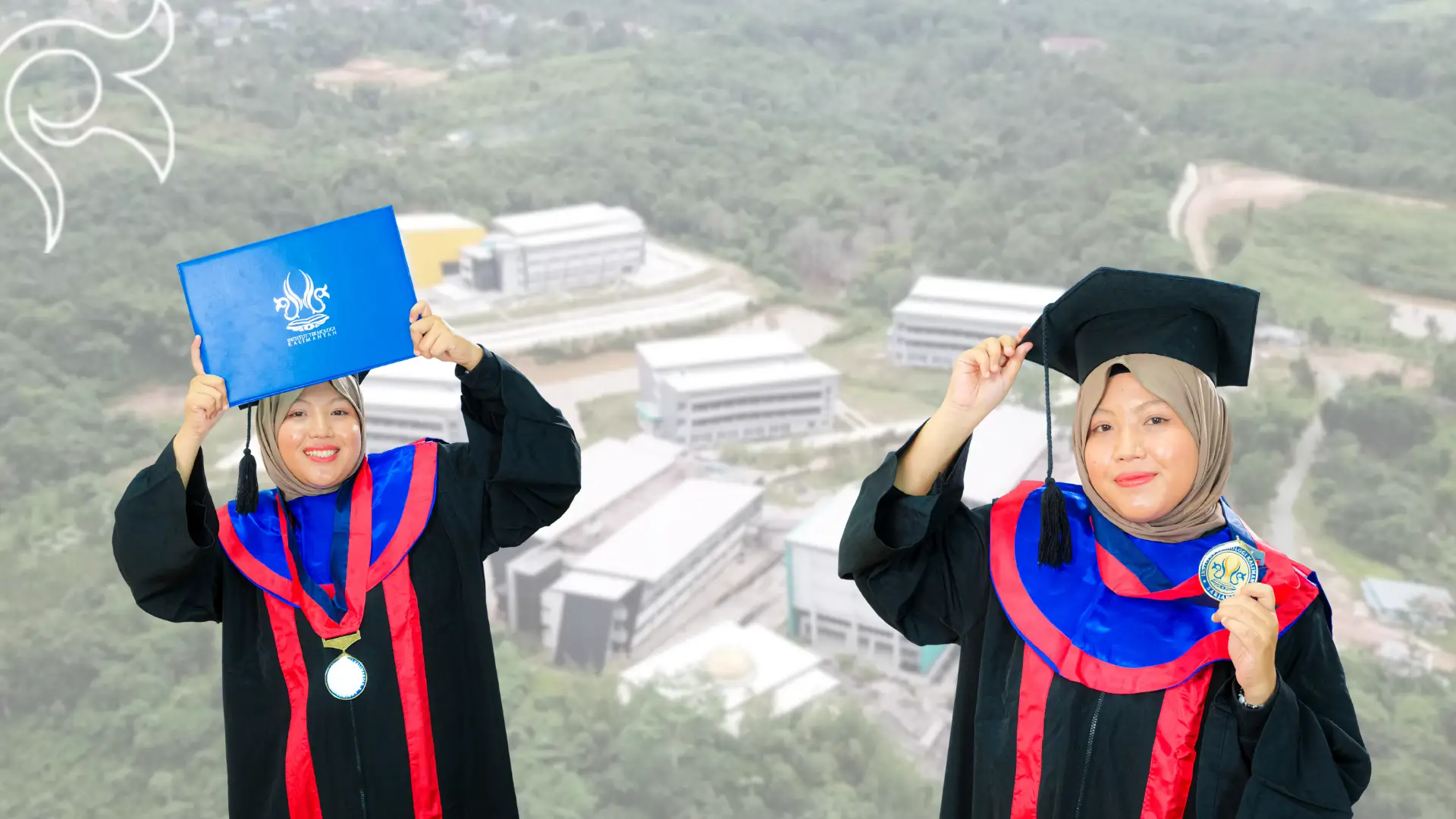
Farida Amanah Becomes Best Graduate of Institut Teknologi Kalimantan FRTI with a 3.71 GPA
 Diktisaintek Berdampak
Nurul Adinda Thalia Salsabila Achieves the Highest GPA of 3.76 at Institut Teknologi Kalimantan FSTI Through an Impactful Internship Program