Detail Berita
TASV: The Dance of Wind Bringing Hope for Clean Energy in the City Center
.webp)
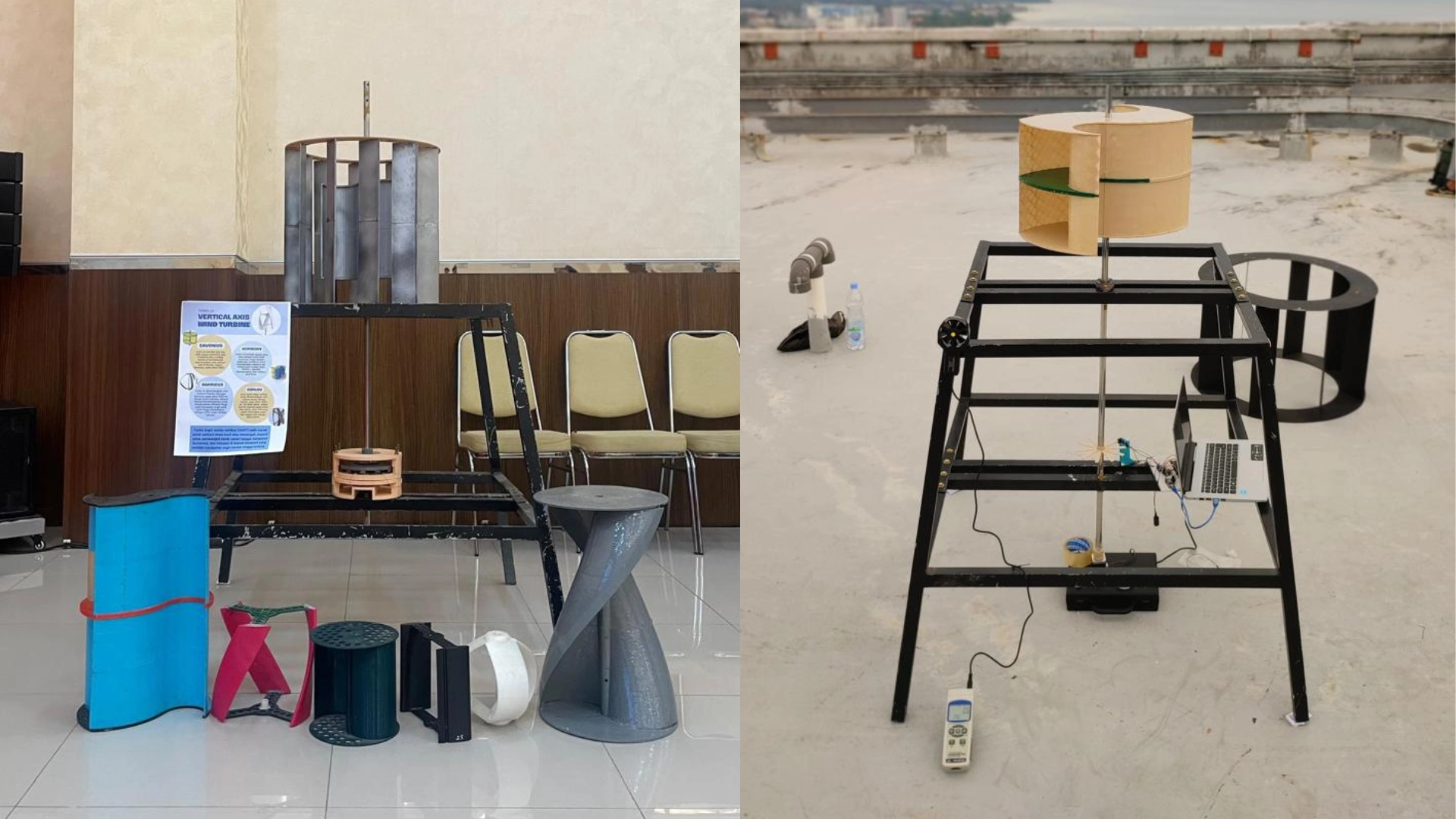
Isi Artikel
More than just a cooling breeze, wind is now emerging as a new hope in addressing the challenges of climate change and the need for clean energy. One innovation that is increasingly shining brightly is the Vertical Axis Wind Turbine (VAWT), affectionately known by its Indonesian acronym, TASV.
Get to Know It: What is TASV?
If you've ever seen giant propellers in open fields, those are horizontal axis wind turbines. TASV is the "urban version" of these propellers. The difference is that TASV has a vertical design that allows it to capture wind from all directions and doesn't need to wait for a consistent wind direction like its horizontal counterpart.
Other advantages? It's more compact, has a flexible design, and most importantly: it's minimally noisy. This makes it perfectly suited for installation in urban areas without causing noise pollution or taking up much space. You could say that TASV is like a modern ornamental plant that not only beautifies a building but also generates electricity.
What Do Researchers Say? ITK's TASV is Under Serious Development!
Behind the scenes, there's a brilliant team from the Kalimantan Institute of Technology (ITK) that has been consistently developing this technology since 2019. Through the Center of Excellence for Science and Technology (PUI PT) for Fluid-Based Renewable Energy Study and Engineering, intensive research is being conducted by the Wind Energy Research Group led by Diniar Mungil Kurniawati, S.T., M.T. They are not just designing the turbine's shape but also encompassing:
- Researching wind potential in East Kalimantan
- Developing TASV models suitable for tropical climates
- Searching for environmentally friendly materials for the blades
- Designing the generator
- And even modeling wind potential in multi-story buildings with advanced simulations like CFD (Computational Fluid Dynamics)
Funding has also come from various sources, ranging from internal ITK grants to support from Kemdiktisaintek (Ministry of Education, Culture, Research, and Technology). This shows that the research world truly views TASV as a future solution.
The Dance of Wind in Urban Buildings
The TASV innovation is expected to not only address clean energy challenges in urban areas but also introduce the concept of Building Integrated Wind Turbines (BIWTs) – wind turbines that seamlessly integrate with building designs.
Imagine turbine blades dancing among skyscrapers, not only enhancing the view but also becoming a source of sustainable electricity. Urban winds are now not just passing by; they are contributing to something significant.
Isi Artikel
Berita Terpopuler
Research and Community Service

Diktisaintek Berdampak


Tags
Institut Teknologi Kalimantan Inovation ResearchTags
Institut Teknologi Kalimantan Inovation ResearchBerita Terpopuler
Research and Community Service
Diktisaintek Berdampak
Berita Terbaru
 News
News
ITK Educational Staff Hold Community Healthy Living Movement (GERMAS) Led Directly by the Rector
ITK Rector Leads Ling Tien Kung Exercise During GERMAS Program
 Achievement
Teams Advance in the 2026 KRTI Proposal Selection
 Scholarship
Registration for the 2026/2027 Gratispol Education Program